Building Trust with Your Audience After Restoration
Explore effective strategies for rebuilding trust with your audience after a website restoration.
Explore effective strategies for rebuilding trust with your audience after a website restoration.

Explore how analytics can guide the restoration process of websites, ensuring informed decisions for optimal performance.
Restoration vs. Redesign: Understanding the Differences By Lena Ortiz A useful comparison: restoration preserves what still works, while redesign changes the structure and presentation. Website restoration and redesign are related, but they solve different problems. Restoration aims to recover a…

Explore essential legal and accessibility considerations for restoring old websites in 2026, focusing on copyright ownership and ADA compliance.

Learn how to develop a content strategy that aligns with your website’s goals post-restoration. Discover key steps and effective distribution strategies.
Why post-restoration monitoring matters A restored website can look finished and still behave unevenly. Templates may render correctly while traffic, speed, or conversion paths lag behind the old site. Monitoring gives you a practical way to confirm that the restoration…
Website Restoration Case Studies: 5 Success Stories and Lessons Learned When a website comes back to life, the interesting part is not just the “before and after.” It is the messy middle where someone has to make old content, new…
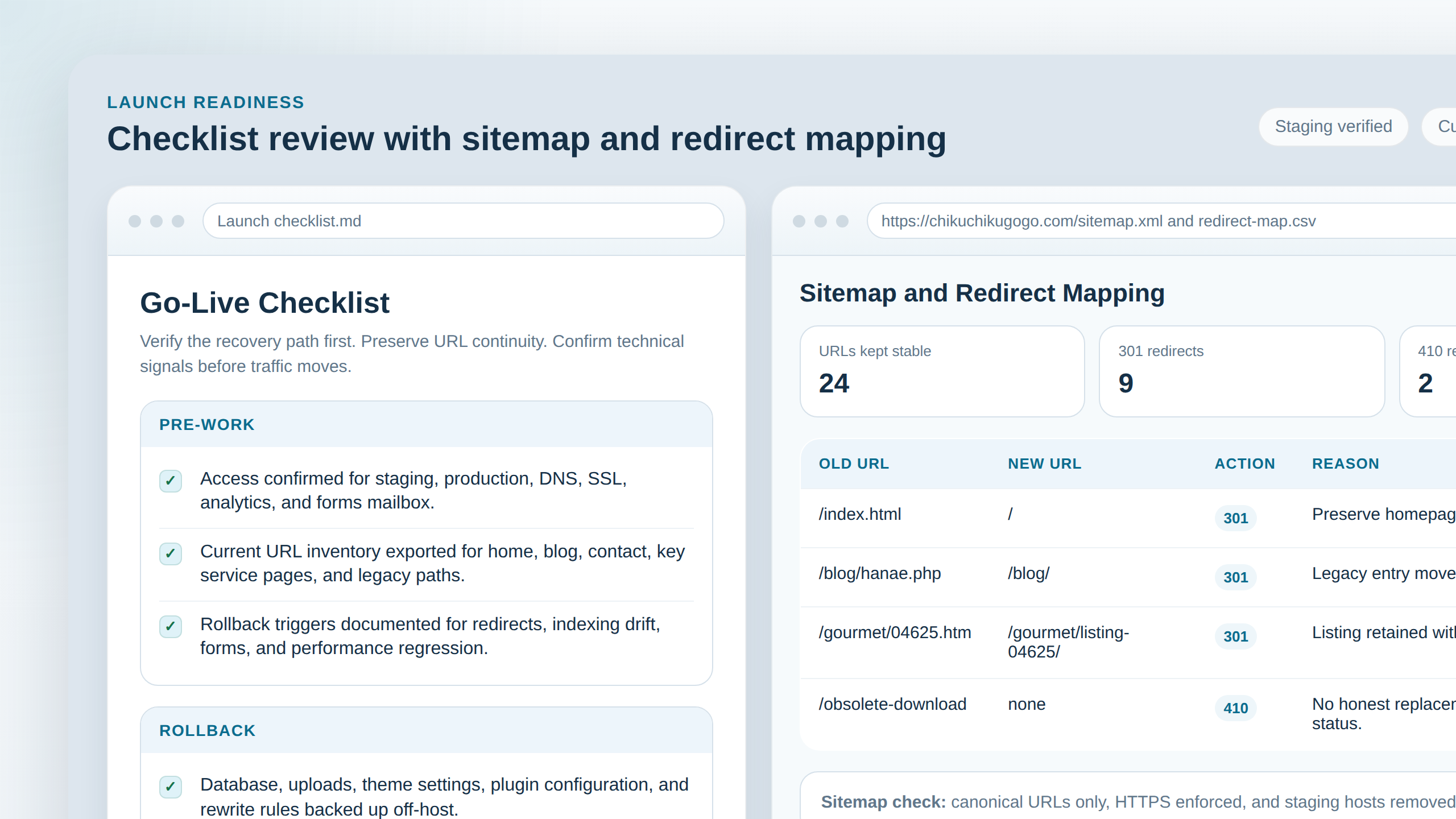
Why restoration planning matters before you publish anything Restoring a WordPress site is not a “fix it live” task. It is a sequencing task. If you change the structure, URLs, and content without a plan, you spend the launch window…
Why SEO Can Slip During a Restoration or Redesign When a site changes shape, search engines have to re-learn it. That is normal. What causes trouble is when the old and new versions do not line up: pages move, links…

By Jasy Green How to Write an About Page That Feels Specific, Trustworthy, and Human Most About pages do not fail because they are short. They fail because they say a lot and explain very little. Visitors usually want four…